Incredible India: News

Pages

Showing posts with label News. Show all posts

Friday, 23 December 2011

31,000 register to 'www.jailchalo.com' to support Anna


Team Anna has now launched an online campaign for their 'jail bharo' agitation from December 30 against government's Lokpal Bill wherein people can register themselves for the protest.
Besides online registration, people can also approach Team Anna through text messages and a missed call service.
Those planning to participate in the 'jail bharo' agitation can either register through www.jailchalo.com or sent a text message to 575758 or give a missed call to 073031509500.
Over 31,000 people registered for the agitation online till this evening alone with Maharashtra and Delhi topping the list with over 5,200 each volunteers joining hands with Team Anna.

Steve Jobs to be honoured with Grammy award


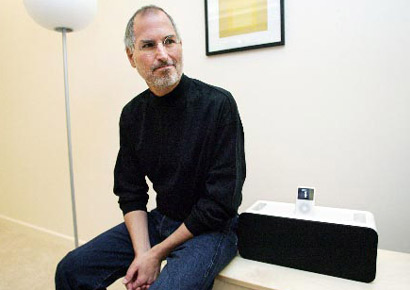
Steve Jobs
Apple co-founder Steve Jobs will be posthumously honoured with a Grammy award for his contribution to music technology, The Recording Academy announced Wednesday.
Jobs, who died Oct 5 of pancreatic cancer, will receive a Trustees Award for helping create products "that transformed the way we consume music, TV, movies and books", Xinhua quoted the academy as saying in a statement.
Apple Computer Inc. first received a Technical Grammy Award in 2002 for contributions of outstanding technical significance to the recording field, the academy said.
Along with Jobs, bandleader and composer Dave Bartholomew, recording engineer Rudy Van Gelder will also receive the award.
The academy also picked the Allman Brothers, Glen Campbell, Diana Ross and Brazilian pianist/singer/guitarist Antonio Carlos Jobim as recipients of Lifetime Achievement Awards. Jobim was known for composing "The Girl from Ipanema", a worldwide hit in the mid-1960s which won a Grammy for Record of the Year in 1965.
Other artists, including trumpeter Wayne Jackson, saxophonist Andrew Love of the Memphis Horns, country legend George Jones, and the late Gil Scott-Heron were also named as recipients.
German sound-technology firm Celemony and the late audio engineer Roger Nichols, who worked with artists including Ross, Placido Domingo, James Taylor and Stevie Wonder, were recognized with Grammy Technical Awards.
"This year's honorees offer a variety of brilliance, contributions and lasting impressions on our culture," said President/CEO of The Recording Academy Neil Portnow.
"It is an honor to recognize such a diverse group of individuals whose talents and achievements have had an indelible impact on our industry."
The honorees will be formally acknowledged during the 54th Annual Grammy Awards telecast at Staples Center in downtown Los Angeles Feb 12, 2012.

Google to debut new Android tablet to rival Apple's iPad


Google Chairman Eric Schmidt has revealed that the company is planning to bring its flagship Android tablet to the market in the next six months to rival Apple's iPad.
"In the next six months we plan to market a tablet of the highest quality," Schmidt told an Italian newspaper.
Google has already had a hand in the development of the Motorola Xoom, but like other Android tablets, it suffered disappointing sales in a market dominated by the iPad.
Since then Google has itself become a major hardware manufacturer via its 12.5 billion dollars acquisition Motorola's devices division, which is currently under consideration by competition authorities.
According to The Telegraph, Schmidt paid tribute to Steve Jobs' role in kickstarting the tablet market, describing the iPad as "amazing".
"Steve Jobs was the Michelangelo of our time. A friend of mine and a unique character, able to combine creativity and visionary genius with an extraordinary engineering ability," the paper quoted him, as saying.
"Steve realised the revolutionary potential of the tablet and created an amazing product like the iPad," he added.
Schmidt said that competition between Android smartphones and the iPhone will be "brutal".
In the smartphone market, Google designs the Nexus range as both a testing ground for new versions of Android and to show off cutting-edge hardware. Samsung manufactures the most recent device, the Galaxy Nexus.

Facebook faces lawsuit over 'Like' button ad


Facebook and its co-founder Mark Zuckerberg face risk of being sued over the site's "Like" button feature.
The site currently reveals any products or interests that users "like" to their friends. This could be illegal under Californian law which forbids unauthorised use of people's likenesses for commercial purposes.
The company has been warned it could be sued by anyone from celebrities to ordinary citizens, Daily Mail reported Monday.
A judge in San Jose has thrown out the company's bid to dismiss the first case against Facebook - where users allege they have been "economically injured" by the site's use of the "Like" button for advertising.
Facebook first introduced "promotions" in January this year - where users opt to "Like" products, often in conjunction with prizes or even bonuses in online games - with Zuckerberg insisting that "a trusted referral is the Holy Grail of advertising."
However, US District Judge Lucy Koh has insisted that users should be entitled to some gain from commercial endorsements that stem if someone chooses to "like" a certain product or interest on the site, according to the Mail.
Whilst the case against the popular site has yet to be heard, Koh added that such a claim "present novel issues of state law for which there is no binding authority."
The company have only just settled a previous complaint by the US Federal Trade Commission over privacy issues, after it was alleged that they made promises to keep consumers information on Facebook private, only to later allowing the data to be shared and made public.
Facebook had so far refused to make a comment with the investigation to continue, the newspaper added.

Thursday, 22 December 2011

Intel's Smart Phone and Tablet for 2012


Intel inside: This “reference design” running Google’s Android operating system is meant to help persuade manufacturers to build their handsets around Intel’s new mobile chips.
Credit: Intel


The era of the personal computer dawned thanks in no small part to the chip maker Intel. But the company has been only a spectator to the rise of smart phones and tablets in recent years. These mobile devices use chips based on designs licensed by the U.K. company ARM, which deliver the power efficiency the powerful, compact gadgets require.
Intel is about to fight back.
Last week, Technology Review tried out prototype smart phones and tablets equipped with Intel's latest mobile chip, dubbed Medfield, and running the Android mobile operating system created by Google. "We expect products based on these to be announced in the first half of 2012," says Stephen Smith, vice president of Intel's architecture group.
Known as "reference designs," the devices are sent out to inspire and instruct manufacturers interested in building products around Intel's latest technology. "They can use as much or as little of the reference design as they like," says Smith, who hinted that the upcoming Consumer Electronics Show in January could bring news of gadgets in which Intel's chips will appear.
Intel's Medfield is the latest in its "Atom" line of mobile chips. So far none of them have seriously threatened the dominance of ARM-based chips in mobile devices, in part because they are more power-hungry. However, the new chip represents a significant technological step toward lower power consumption.
Previous Atom designs spread the work of a processor across two or three chips, a relatively power-intensive scheme that originated many years ago in Intel's PC chips. But now Intel has finally combined the core functions of its processor designs into one chunk of silicon. "This is our first offering that's truly a single chip," says Smith. The all-in-one design, known as a system on-a-chip, is a standard feature of the ARM chips so dominant in smart phones today.
The phone prototype seen by Technology Review was similar in dimensions to the iPhone 4 but noticeably lighter, probably because the case was made with more plastic and less glass and metal. It was running the version of Google's operating system shipping with most Android phones today, known as Gingerbread; a newer version, Ice Cream Sandwich, was released by Google only about a month ago.
The phone was powerful and pleasing to use, on a par with the latest iPhone and Android handsets. It could play Blu-Ray-quality video and stream it to a TV if desired; Web browsing was smooth and fast. Smith says Intel has built circuits into the Medfield chip specifically to speed up Android apps and Web browsing.

Aakash tablet delivery delayed till January 2012


The wait for the Aakash tablet is going to be longer, even for those who have already ordered the ultra low-cost tablet online. According to recent reports, DataWind is scheduled to start distribution of the Aakash tablet only in January. It's notable that the Aakash tablet was supposed to be delivered within seven days of the order.
A spokesperson of DataWind tells The Mobile Indian that the people who had booked the tablet online would start receiving the device in January. However, the spokesperson didn't elaborate reasons behind the delay.
It may be recalled that the Aakash tablet had sold out in less than a week after its online release.DataWind is still accepting pre-orders for the UbiSlate 7, which is an upgraded version of the Aakash tablet. The UbiSlate 7 is slated to launch in January next year. Meanwhile, there's no update on when the Aakash tablet will be available in retail stores.
 

Aakash tablet available to Mumbai students for Rs 1,000


 City college students will now be able to purchase the Aakash computer tablet, which was launched in October, at just Rs 1,138. While the market price of the low-cost tablet is Rs 2,500, students will get it a much lower price.
Union minister Kapil Sibal launched the tablet for students across the country in October. It will now be made available to 100 varsities, including Mumbai University.
Rajpal Hande, director, board of college and university development, said, "We have issued circulars to all affiliated colleges and departments. They have to get back to us with their requirements. We are hoping that students will avail of the facility as they are getting it at almost a 50% discount. I am also told an improved version of the tablet will be launched in February, so the students might get an upgraded version."
Students will also be able to access all the online content for undergraduate and postgraduate courses that is being developed under the human resources development ministry free of cost. Students can place an order with their colleges or their departments.
The device will also enable students and teachers in the university to access the e-content anytime and anywhere, added Hande.

Tuesday, 20 December 2011

Google Doodles Now you can buy them

Ever wanted to own your own piece of Googlehistory? Google has revamped its Doodle site, giving users the ability to purchase items featuring Google's thematic logos aka "doodles." 

The update brings the page into line with the internet giant's other socially enhanced sites and enables users to easily share their favorite logos on social networking sites such as Google+. 

"Since our very first one in 1998, doodles have been our way to share with you the things we love or are excited about. In the past few years we've started to create doodles that people can not only look at but also play with. Our first interactive one featured a clickable slideshow ofHalloween candy in 2009 and since then we've invited people to insert a coin to play an arcade classic, watch a film, and even compose an epic guitar solo, all on the Google homepage," announced Ying Wang, director of Product Management, Google. 

The new site features over 1,000 doodles, some of which include a behind-the-scenes look at the creative process and links to the interactive versions. 

If you happen to fall in love with one of the doodles you can have it printed on a shirt, a mug, a sticker, a skateboard, or a card via Google's "Doodles on Demand" page thanks to a partnership with print-on-demand marketplace Zazzle. 

If you prefer to show your love for a different technology company you can stop by theMicrosoft Merchandise Store or the Apple Company Store.

Friday, 16 December 2011

'Incredible India'? Hardly so


Frustrated executives while away time in five-star hotels waiting for deals that never come, and civil servants play video games in their offices - growing signs of the reform limbo and crisis of confidence behind India's economic malaise.

Policy paralysis, corruption scandals and a government fearful of political backlash to any bold moves have combined with the global slowdown and worsening domestic finances in the last few months to derail Asia's third-largest economy.

India now faces the worst-case scenario that was touted earlier this year - stubbornly high inflation, slowing growth, a mounting fiscal deficit, a rupee that risks freefall -- and both policymakers and the Reserve Bank of India (RBI) have few levers to fix it.

For years, Indian entrepreneurs have boasted they can do business despite the government - adeptly working around potholed roads, clogged ports and reams of regulatory hurdles.

But government inertia - what many politicians see as "playing safe" - is taking its toll on corporate confidence.

Entrepreneurs once feted in Bollywood movies as national heroes, whose million-dollar homes and jetset lifestyles were a beacon for millions of India's aspiring middle classes, no longer seem capable of driving the $1.6 trillion economy.

"We may have seen phases of economic growth slower than this in the two post-reform decades, but never has the entrepreneurial mood been so low," wrote Shekhar Gupta, editor-in-chief of the Indian Express.

It's echoed across offices of business leaders from Mumbai to Delhi. One foreign executive described increasingly strained telephone conversations over the past year with his U.S.-based CEO as deals became mired in red tape and ministerial inertia.

"They always understood that India was difficult to do business in. But not this difficult," said the executive, who asked not to be named as he was not authorised to speak for his company.

The banking sector is now under strain from bad loans.

Economic reforms that may bring in much-needed foreign investment, such as opening up the supermarket sector to the likes of Wal-Mart Stores Inc (WMT.N), have been put on hold as political parties eye important state polls next year.

Even reforms seen as no-brainers politically, such as the introduction of a digitalised national ID card or food subsidies for the poor, have faced delays as opposition parties and coalition partners smell blood ahead of a 2014 general election.

FROM COCKY TO FEARFUL

India used to be full of brash business leaders.

When Tata Steel (TISC.NS) bought an Anglo-Dutch rival in 2007 for $12 billion, the newspaper headline "Empire Strikes Back" epitomised the supreme confidence of India's aggressive capitalist kingpins then on a global buying spree. JaguarLand Rover and other foreign brands soon followed into Indian hands.

The economy may grow at under 7 percent this fiscal year, down from initial forecasts of 9 percent. That's still a far cry from the around 3.5 percent "Hindu" rate of growth that plagued the decades after India's independence from Britain in 1947.

But these last few heady years have changed expectations.

These days, growth below 7 percent is enough for investors to delay projects, for banks to put off loans and for voters to get angry: 7 percent is the new 2-3 percent.

It was corruption scams surfacing over a year ago that may have started it - a potentially $39 billion scam involving selling telecoms licenses at rock-bottom prices effectively saw distracted politicians asleep at the economic wheel.

Suddenly politicians were jailed and billionaires questioned by police. It sent shudders through the political class. The invincibility of the political "untouchables" disappeared.

Inside India's famously bureaucratic ministries, middle-level civil servants passed the buck to top-level officials who in turn passed the buck to their reluctant political masters.

One defence contractor, who asked to not be named due to the sensitivity of the issue, recounted spending weeks at a top hotel, sipping drinks every evening with fellow frustrated arms dealers waiting for "imminent" defence ministry decisions that never came.

An Indian executive likened the country's economic malaise and government's reform limbo to an old village adage - a bullock knows that if it goes to work in the field it could get whipped, while the animal that lazes around far away does not.

"Once the spotlight is on, even minor mistakes become noticeable," said the vice-president of an infrastructure firm about a slowdown in decision making ever since corruption scandals broke last year. "That's why nobody wants to take decisions."

Many civil servants have been seen playing computer games during official hours when parliament sessions are adjourned or their minister goes on trips for G20 or World Bankmeetings, according to one government official.

Prime Minister Manmohan Singh may be reform-minded. But with real power lying with the populist-inclined Sonia Gandhi, he has been unable or unwilling to press for new steps to modernise and open up the economy.

With Gandhi ill, reportedly with cancer, there are signs the family dynasty that has run India for decades has lost its bearings, increasingly unable to keep its coalition partners in line as parties jostle for power before the 2014 election.

The cabinet's one sudden announcement of major reform - allowing foreign firms to hold 51 percent stakes in the supermarket sector - may have been partly driven by economic panic as the rupee plummeted, with Asia's worst-performing currency suffering from capital flight to safe havens like U.S. Treasuries.

But Singh's about-turn only 10 days later in the face of a political backlash underscored that, even at a time of alarm over the economy, politics and the concern about forthcoming elections took precedence.

FLOWS SLOW, CONFIDENCE EBBS

India's annual financing requirement of $119 billion is the highest in Asia, according to a Nomura report. The trade gap for the fiscal year to March 2012 is expected to widen sharply to $155-$160 billion from $104.4 billion a year ago.

Foreign funds are net sellers of about $300 million of Indian shares this year in sharp contrast to record investment of more than $29 billion in 2010, and the 30-share BSE Sensex is down more than 23 percent, making it the worst-performing major global market this year.

"Industry is geared up to deliver infrastructure in line with the strong growth pattern and the government's forecasts," said Russell Waugh, managing director of Leighton Welspun Contractors, part of Australia's Leighton Holdings (LEI.AX).

"But the flow (of new projects) at the moment, the real flow, is not aligned with that gearing. So we're seeing most companies struggling."

Infrastructure assets, including telecoms, construction and power, which account for about 25 percent of total corporate credit, are now a key concern for banks.

Worries about rising bad loans prompted Moody's Investors Service earlier this month to cut its outlook on India's banking sector to "negative" from "stable", saying monetary tightening and a slowdown in the economy would cut bank loan growth.

The car industry - a symbol of the aspirations of millions of India's middle classes - is now an example of how slipping growth and high interest rates have hit consumer demand and investment decisions.

Car sales in India, which jumped 30 percent in the last fiscal year, have slumped due to high interest rates and rising input costs. Sales may just break even this fiscal year.

Maruti Suzuki (MRTI.NS), India's biggest automaker, is deferring an investment of $560-740 million in plants in the western state of Gujarat due to the economic gloom.

"When we will start work in Gujarat will depend on how the market improves in the future... at the moment the general economic situation is too negative to justify it," Maruti Chairman R. C. Bhargava told Reuters. "There's no point creating excess capacity if the demand is not there."

NO QUICK FIX

There is no quick fix for the government, with the fiscal deficit set to beat its target of 4.6 percent of GDP. But there is little sign of efforts to help investment, including speeding up approvals of projects hit by red tape and environmental approvals.

One official, monitoring government infrastructure projects, said that of 558 government projects, 241 were delayed as of end-July, resulting in a cost overrun of some 20 percent, or more than $31 billion.

The projects, which include setting up airports, new railway lines, shipping ports, roads and power plants, have been delayed by more than two years on average due to issues of land acquisition, environmental clearance and rising costs.

Senior government officials, who declined to be named, described a finance ministry dominated by 76-year-old Pranab Mukherjee, who is more adept at bringing together unruly coalition allies than doing anything bold about the economy.

"Mukherjee is a politician first with little time for his own ministry as he is also the chief trouble shooter for the Congress party. Many bureaucrats don't even get to see him for days and have no access to him," said one.

"His style is very old world and some say not very responsive to financial markets. It's not surprising that in a crisis like what's confronting us currently, lack of imaginative leadership in the treasury department is also reflecting in the economic woes facing the country."

Mukherjee first became finance minister in 1982, way before India had begun to rethink its post-independence socialist, state-driven economic model.

For many, India will remain in limbo only until a real crisis prompts it to act - similar to the 1991 balance of payments crisis that ushered in the country's first economic reforms under Singh, who was then finance minister.

"At the end of the day, I feel you need crisis to get going again," said V Ravichander, who advises multinationals on doing business. "And even though our growth rates have fallen from 8 to 6.9 percent on the last estimate, I guess people feel 6.9 is not still low enough for us to do something about it."

But that inertia could means India faces some turbulent years ahead, exacerbated by the 2014 election that may just polarise the country further.

"The new Hindu Rate of Growth is 6 percent and on all evidence, from macroeconomic data to the empty billboards of Mumbai, we're headed there next year," wrote Gupta.

"Returning to economic stagnation like that is bad enough by itself. But this is not the forgiving India of the past. This India has tasted growth, progress, optimism and aspiration."

Thursday, 15 December 2011

HTC's Updates For Desired HD, Desired S And Incredible S


HTC has come up with a Sense 3.0 and Android 2.3.5 Gingerbread update to older phones’ Desire HD, Desire S and Incredible S. HTC revealed the list of phones which will get the HTC Sense 3.0 UI and Android 2.3.5 Gingerbread update in HTC Turkey’s official Facebook profile.
 
Apart from Desire HD, Desire S and Incredible S,  the Wildfire S will also get the Android 2.3.5 Gingerbread beside the Lockscreen update.

Also the update for Twitter and Facebook on HTC Salsa would be available shortly. And finally the HTC Flyer tablet will get the Android 3.x Honeycomb update.

Whereas the new HTC’s Android phones continue to come out with the HTC Sense 3.5 UI update. It is still doubtful whether the devices will get Android 4.0 Ice Cream Sandwich update or no.

The new version features are like the Friend Stream widget which combines Twitter, Facebook and Flickr information and Leap which allows access to the home screen straight away. With the new software, the users can enjoy the new 3D carosel, improved unlock screen, new widgets and setting controls straight from the notification bar- the new features which were already introduced by HTC.

Panasonic Smartphones to Launch Globally


 Panasonic has announced that it will re-enter the business with the launch of android based Smartphone starting this March. European markets will be first ones to get these phones followed by Asia and U.S. The company has also released pictures of their first Smartphone, which features a 4.3 inch qHD screen with a unibody design. It will be dust-proof and water proof as well. It will feature NFC technology and will be based on Android operating system. Price of device is not yet revealed.
 

The company aims to sell 15 million phones by the year 2016, a modest target given the fact that only Indian phone market is worth close to 12 million (world market is 472 million) phones per annum. The Panasonic Group created the Systems & Communications Company (SNC) in April this year in advance of its reorganization scheduled for January 2012 in order to handle products and services related to system, network and mobile communications.

Within this company, Panasonic will maximize its internal resources, including making use of an existing factory in Malaysia. Currently, phones for the Japanese market are manufactured in this factory but now the same factory is also scheduled to manufacture the first global model as announced.

Panasonic will be utilizing the group's technological assets and development resources as well as its production and sales sites around the world and the company has all this in plenty. For instance Panasonic has a lot of expertise in the battery space and is one of the largest manufacturers of Li-ion batteries.

'UID' (AADHAAR), Losing Its Own Identity


Aadhaar, meant to be the single source of identification for Indians, is facing a lot of criticisms and risks, because of which the project is fearing its end at present. The news of present crisis and its doubtful completion came as a real shocker as many of lakhs of Indian citizens have already received their cards and the UID appointment cards are about to go online to ensure faster and seamless distribution.
'UID', Losing Its Own Identity


‘AADHAAR’ is an initiative of UIDAI (Unique Identification Authority of India), which provides UID or Unique Identification Number to each Indian national. It is a 12-digit unique number said to be stored in centralized database and linked to the basic demographics and biometric information such as photographs, fingerprints and iris identification.


This UID or Aadhaar works as a proof of identification as well as of address. In the words of the Chairman of UIDAI, Nandan Nilekani, “UID is the number of life” for those millions of Indians who at present do not have access to public schemes. Till date, more than one 5.75 million, UID cards are issued.


Technically, as Aadhaar is entirely dependent on biometrics, there have been concerns expressed by some experts that the biometrics data is not reliable as it has shown 0.01 percent of error in fingerprints and iris alone; this low rate combined with the photograph match can achieve the massive level of uncertainty, to which the experts says this test ‘actually tells nothing’ and also that Aadhaar may achieve the power for civil autonomy and also can capture one’s solitary desecration while indulging their UID registering in non-government agencies.


In the political perception, the former CM of Kerala, V. S. Achuthanandan, including many others, claimed that this program was being launched without “proper debate”.

Hence technically, politically, economically and socially the UID project is facing many contradicting opinions. The UID initiative has an estimated cost of around  1,660 crore for the year 2010-11 and 2011-12, where more than  556 crore has already been spent on the scheme, which may not be recovered from the future revenue produced from the project. “Basically, we thought it was waste of money”, a member of the parliamentary standing committee had apparently stated. The committee members have doubted the utility purpose of the scheme and even the efficiency of the technology.


As stated by India Today, a draft report prepared by the parliamentary committee to refuse the National Identification Authority of India Bill is ready and will be revealed soon. The decision is taken communally by Parliaments standing Finance Committee and some of the Congress members, who also agree to the opinion that UID project is “directionless.”


Furthermore, it is said that the bill may not be dismissed entirely, but needs a thorough review or reconsideration but is not acceptable in its present form. Most voiced opponents against the scheme among the panel are MPs like S. S. Ahluwalia (BJP), Gurudas Dasgupta (CPI), Bhartruhari Mahtab (BJD) and Rashid Alvi (Congress) and also by finance minister, the home ministry and the Planning Commission. The draft report mentions that the UID concept has no clarity or purpose and also lacks a concept in its context and execution.


The draft report mainly has focuses on four of UID’s major drawbacks like – insertion of “residents” rather than “citizens”; privacy issues of those being registered as the UID numbers; duplication of the work being done for preparing the national population Register (NPR) using the same biometric attributes; and the massive expenditure that the projects entails.


App Store Downloads Top 100 Million


Over 100 million apps have been downloaded from Apple's Mac App Store since its launch in January, Xinhua reported.

"With more than 100 million downloads in less than a year, the Mac App Store is the largest and fastest growing PC software store in the world," Apple said in a statement , adding that "Mac App Store is changing the traditional PC software industry."

Apple launched the Mac App Store in January as a free download for Mac OS X users, allowing users to sift through free and paid applications and download them to their devices like Apple mobile App Store. After 24 hours of release, there was a total of more than one million downloads. Apple said that the Mac App Store now offers thousands of apps in education, games, graphics and design, lifestyle, productivity, utilities and other categories.

According to its policies, 70 percent of the revenue generated from paid applications goes to developers while the remaining 30 percent is kept by Apple. Apple's first application store is the mobile App Store launched in 2008, which, in the tech giant's words, has "changed how people get mobile apps".

In October, Apple said, its mobile app downloads topped 18 billion and over $3 billion had been paid to developers since 2008.

Facebook Loosing U.S. Users?


 Facebook the world’s largest social network site with more than 800 million active users around the world and roughly 200 million in the United States or two-thirds of the population, as of December 2011. According to Inside Facebook, a leading source of news and analysis on Facebook’s global growth says, Facebook in the U.S. has lost nearly 6 million users, falling from 155.2 million at the start of May 2011 to 149.4 million at the end of it.


This is the first time that Facebook has lost the U.S. users. Even Canada also fell significantly, by 1.52 million down, although it has been fluctuating around that number. Meanwhile, the United Kingdom, Norway and Russia all posted losses of more than 100,000 users.



Facebook has prepared most-expected public offering and it is eager to show off its thrust by building on its huge membership. But the company is still losing its users in U.S. Some people just refuse to participate and including people who have given it a try.

Elizabeth Taylor's pearl breaks records


London: A pearl given to screen legend Elizabeth Taylor by her husband Richard Burton has sold for a record USD 11.8 million.

The drop-shaped 50.6-carat pearl known as 'La Peregrina' is suspended from a necklace lined with diamonds, rubies and cultured pearls. It belonged to a succession of eight Spanish kings between 1582 and 1808.

There was a fierce bidding battle during the auction at Christie's, lifting the price well beyond the auction company's USD 2 million to USD 3 million presale estimate, reported Daily Mail online.

The Hollywood icon, who died in March at the age of 79, was married eight times, including twice to her 'Cleopatra' co-star Burton. Known for her love of jewels, she was showered with diamonds, rubies and emeralds by her admirers.

Other items that went under the hammer are an emerald and diamond necklace by Bulgari went for USD 6.1 million, a Bulgari brooch at USD 6.6 million and a set of ear pendants at USD 3.2 million.

Another big seller was a Van Cleef & Arpels diamond ring at USD 2.3 million, while Bulgari pearl and diamond ear pendants fetched USD 2 million.

Hundreds of haute couture dresses from Chanel, Christian Dior, Givenchy, Valentino, Versace or Yves Saint Laurent, jackets, caftans, handbags and other accessories were on sale and they tell both the story of the star and also the changes in fashion during her eventful career.

Veena Malik being used?


Veena Malik has been in news for her alleged nude photo shoot done for FHM magazine.  The magazine claims that she has done the shoot and Veena begs to differ. The issue has gained a lot of media attention, which is now bothering the Pakistani actress. In a recent statement, she asked the media to let the matter be under judicial surveillance and not make any false accusations.

Sharing her anxiety, Veena says, “I understand that I have been linked to many controversies in the past, which have been related to my career. But, all I’m trying to do is make a name for myself as a woman in the entertainment industry. I am not doing anything different from anyone else and sadly, at this moment I feel like I have been used by a publication so that they can sell more copies’’

Veena adds, “Why would I spend thousands of pounds on lawyers and legal fees, if I didn’t feel like there was a case? I simply want justice for what has happened.”

Well, the controversy queen wants to leave her crown and lead a simple life.  We hope the glamour world allows her to do so.

'The Protester' 2011 Person of the Year


New York: 'The Protester' is the Time's 2011 Person of the Year, as the magazine honoured those who stood up for common people, from India's anti-graft crusader Anna Hazare to Tunisia's street vendor Mohammed Bouazizi, who set himself on fire sparking the Arab Spring.
The US magazine said the revolution began in Tunisia, "where the dictator's power grabbing and high living crossed a line of shamelessness, and a commonplace bit of government callousness against an ordinary citizen, a 26-year-old street vendor named Mohamed Bouazizi, became the final straw." 
Last year, the Time picked Facebook founder Mark Zuckerberg, whose competitors included another 21st century communications guru, WikiLeaks maestro Julian Assange.
Accompanying the Time report is a photo essay of profiles of over 30 ordinary citizens who did not give up in the face of death and torture and continued to fight tyrannical regimes, corruption, inequality and injustice all over the world.
Among the pictures is a close-up profile of a smiling and Gandhi-cap wearing Hazare and one in which he is sitting cross-legged. Its caption reads "anti-corruption crusader in India." 
"When God wants to bring in change, he needs a vehicle of change, and I became that vehicle," Hazare is quoted as saying. Among the other photos is that of Ahmed Harara, a Cairo dentist who was blinded by rubber bullets during clashes in January, protesters from the Occupy Wall Street movement, Egyptian protesters, leading Tunisian feminist Professor Dalenda Largueche, Greek protest dog Loukanikos as well as that of a clenched fist.

Wednesday, 7 December 2011

Veena Malik disowned by father after nude photo scandal


Veena Malik disowned by father after nude photo scandal
Veena Malik
LONDON: Pakistani actress and model Veena Malik's father has disowned her and demanded that she be punished, after nude photos of her appeared on the cover of a men's magazine.

Malik has denied modeling for the magazineFHM and has insisted that the pictures were fake.

But her father Malik Mohammad Aslam has made it clear in an emotional outburst that he is not impressed with the situation.

He has also demanded that she make a promise not to visit India once the scandal is over.

"I have disowned her," the Mirror quoted him as saying.

"I have severed all ties with her and I don't want her to have any share in whatever meagre assets I have until she is cleared of the controversy and pledges not to visit India again," he said.

He went on to suggest that he hoped his daughter would be punished if found guilty of stripping off for the racy images "so that no other woman would think of doing such thing".

"I can ignore if she disobeys me but I cannot tolerate anything against my country and my faith," he added.

Why India can't censor the internet


In just 24 hours, in the Facebook alumni group of St Stephen's College, Communications Minister Kapil Sibal's ratings crashed faster than that of US President Barack Obama or what former telecom minister A. Raja, now in judicial custody over second generation (2G) spectrum case, ever had.

In a survey to pick star alumni for a big debating clash with counterparts from the rival college across the road, Sibal was on the top five a week ago -- among other stellar Stephanians like Planning Commission Deputy Chairman Montek Singh Ahluwalia, former federal minister Mani Shankar Aiyar or former UN diplomat Shashi Tharoor. No longer!

As the #Idiot hash-tag topped Twitter trends, some withdrew their votes for Sibal, and there were posts like "Chuck him across the road" -- a scathing insult, equivalent to the Parsis' excommunication.

Just a preview of the global firestorm over the next two days!

The fire wasn't from anonymous teens. Seasoned analysts blasted Sibal. Investor Mahesh Murthy posted: "Censor this! :) ! Five of the top 10 Twitter trends in India right now are: #IdiotKapilsibal, #KapilSibal, #Censorship, #FreeSpeech and #FreedomOfSpeech."

All this, for just one statement from a politician not unknown for his foot-in-mouth disease? Not quite. For, he has the power to misuse and try to make it happen.

During the Anna Hazare movement, Sibal summoned representatives of the social networks. In a king-and-subjects interaction, he kept them waiting, then kept them standing in his room; gave them a pre-emptive dressing down; and snapped: "I don't want any anti-government stuff on your networks. Fix it." There was no room for discussion.

So here's a five-point Internet 101 for the illustrious Mr. Sibal.

1. The internet cannot be edited: Duh! In an early Dilbert strip, the pointy-haired boss demanded that Dilbert "download" the internet and fax it to him. A decade down, it's not so funny any more.

The internet is not traditional media. India's 1975 emergency and the media clampdown was possible because of the linear, broadcast nature of the old media. New media is distributed. No copy desk or censor board can "fix" it. There is no editor to arrest. And, most content is hosted outside India's jurisdiction.

2. User-generated content cannot be filtered: That would slow down the global internet to a crawl, with posts appearing after days -- even assuming so many "editors" could be hired by, say, a Facebook or a Twitter.

Are phone operators responsible for "content" carried on their networks -- or their CEOs arrested if someone made a terror threat over a phone call? No, the telco is simply asked to help with the investigation -- into who made the call.

Yes, internet content has the permanence and public-impact potential that a phone call does not, but equally, it lends itself brilliantly to self-regulation.

3. Peer review works: Wikipedia is the best example. Who could have imagined that a user-created encyclopedia could be so objective, and comprehensive? Yes, anyone can go in and edit anything (barring entries like "Kapil Sibal", which have been locked due to vandalism!).

If you make an inappropriate change, someone will come in and correct it. And so it is on Facebook or Twitter. Abusive posts will be reported, blocked, and the individuals knocked out of the site.

4. Draconian controls are not necessary: In this age of global cooperation on terror, companies cooperate. A rational request from India to Google or Facebook to bring down offensive content will be heard -- regardless of jurisdiction.

5. Yes, there are precedents for Internet control, but...: Such censorship is in countries India doesn't want to be -- China, Pakistan, Myanmar or Saudi ArabiaPakistan became a laughing stock when it issued a list of banned words for SMS messages. (That list is now standard reading for anyone wanting a quick lesson in present and future abuses that aren't in any dictionary.)

The big daddy of "regulation" is China, where everything is filtered, and if you break those filters, you are charged with treason. What a role model.

But wait.

Kapil Sibal knows all this, right? So why is this bright star from Harvard Law School and St. Stephen's college now sounding so anachronistic in the internet age? Is it the old "thou shalt display higher loyalty to the royal family than the prince himself" mantra?

If Kapil Sibal is to defend himself against the charge of sycophancy, he is on a weak footing. There were many prior potential triggers for tackling social media, including fanatic religious posts, derogatory comments by Pakistan sympathisers, Anna Hazare, and more. That he finally picked a post that targeted Sonia Gandhi suggests that this was not out of serious, objective concern about India's stability, security or secular fabric.

(Prasanto K Roy is chief editor at technology publishers CyberMedia)